
2026 Healthcare Compliance Benchmark Webinar: 4 Key Insights
Healthcare compliance teams are entering 2026 under growing pressure. Regulatory expectations continue to rise, resources remain constrained, and enforcement scrutiny shows no signs of easing. What separates strong compliance programs from vulnerable ones is no longer intent or effort, but evidence, structure, and execution.
That reality was front and center during SAI360’s recent webinar on the 2026 Healthcare Compliance Benchmark Report, led by Richard P. Kusserow, former DHHS Inspector General and CEO of Strategic Management Services. Drawing on data from healthcare organizations across the U.S., the session delivered a candid look at where compliance programs are holding up and where gaps are becoming harder to ignore. As Kusserow noted early in the discussion,
“Compliance programs are living, evolving systems. They must respond to constantly changing legal, regulatory, and business environments.”
The benchmark data, he explained, provides real‑world insight into how programs actually function, not just how they are designed on paper.
Key Insight 1: Compliance Reporting Through Legal Continues to Raise Red Flags with Regulators
Another key theme was compliance independence. While still common, having compliance report through legal continues to raise concerns with regulators. Kusserow was direct on this point:
“Although not prohibited by law, regulators consider compliance reporting through legal counsel to be a bad practice because legal priorities can conflict with compliance objectives.”
He explained that legal counsel’s role is to protect privilege and manage litigation risk, while compliance must focus on prevention, transparency, and remediation. When those roles are blended, escalation pathways can be weakened and critical information filtered before reaching leadership or the board.
Regulators increasingly expect compliance to operate with autonomy, clear authority, and direct access to senior management.
Key Insight 2: Internal Metrics Alone Do Not Prove Compliance Program Effectiveness
The webinar also addressed a persistent misconception. Many organizations rely heavily on internal metrics such as training completion rates, hotline volumes, and self‑assessments to demonstrate compliance effectiveness. While necessary, these measures focus on outputs, not outcomes. As Kusserow explained,
“Effectiveness is not about outputs. It’s about outcomes. You have to look under the hood to see whether the program is actually reducing risk.”
Independent assessments carry greater credibility with regulators, uncover issues internal teams may miss, and provide clearer, prioritized remediation plans. Kusserow noted that relying solely on internal evaluations can create real and perceived bias, undermining regulatory trust.
Key Insight 3: Staffing and Budget Gaps Signal Compliance Program Weakness to Regulators
The 2026 Healthcare Compliance Benchmark Report highlights persistent challenges across staffing, budgeting, and program maturity. A significant portion of organizations continue to operate with minimal compliance staff and limited budgets, even as regulatory expectations grow more complex.
Kusserow cautioned that regulators do not view these gaps as operational constraints.
“Enforcement agencies see inadequate staffing and budgets as indicators of program weakness, not financial decisions.”
At the same time, the data shows progress in areas like compliance committees, work planning, and risk assessments. The takeaway is clear. Structure alone is not enough. Execution, resourcing, and leadership engagement determine whether a compliance program can withstand scrutiny.
Key Insight 4: Regulators Are Raising the Bar for Healthcare Compliance Programs in 2026
Healthcare compliance programs are no longer evaluated on policies alone. Regulators expect proof of independence, adequate resourcing, effective oversight, and continuous improvement. Organizations that wait to address these issues until enforcement begins will find themselves reacting under pressure.
The webinar and the 2026 Healthcare Compliance Benchmark Report together provide a practical lens into what regulators are looking for in 2026 and how healthcare organizations can align their programs accordingly.
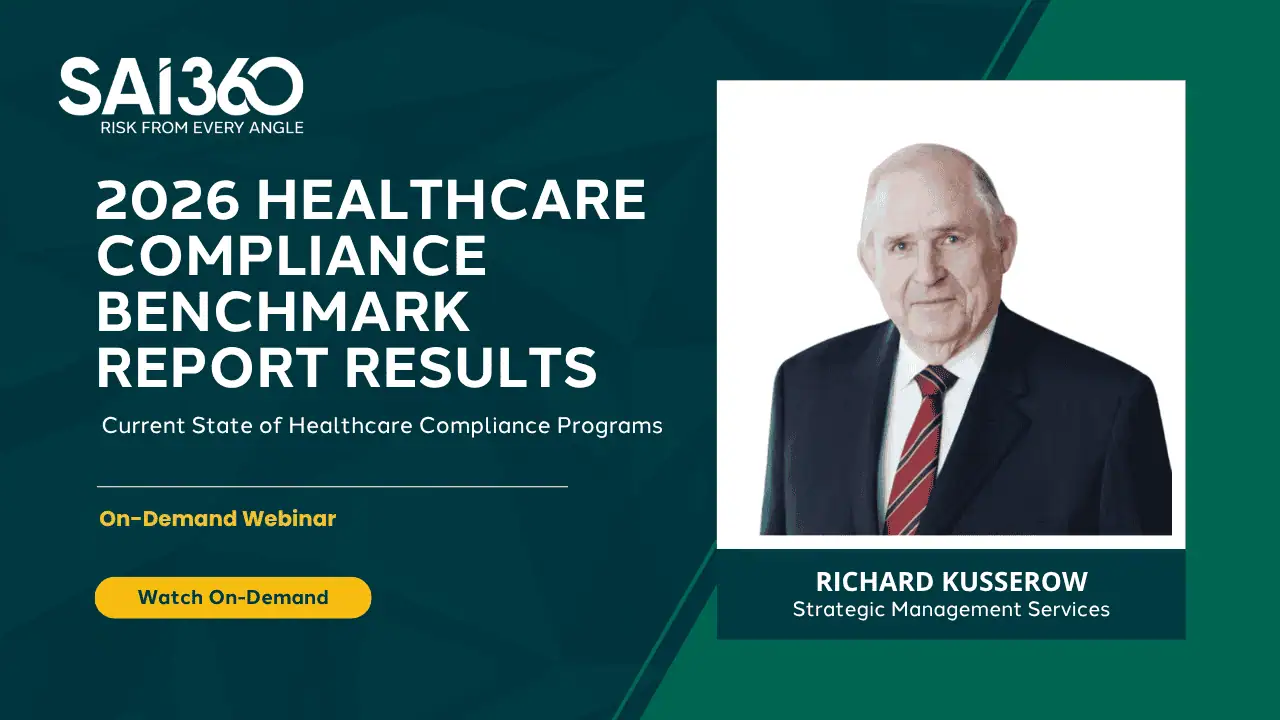
For healthcare compliance leaders, these insights are not optional reading. They are a roadmap for navigating the year ahead with clarity and confidence. Watch the full webinar here.
Share this article
Follow us
Table of Contents