
FRAMEWORK

Strengthen Your ISMS with ISO 27001

An effective Information Security Management System (ISMS) is more than a certification requirement; it’s the foundation for managing information security risk as your business evolves.

SAI360 helps you implement ISO 27001 faster with pre-mapped controls, automated evidence collection, and connected risk management, making it easier to strengthen governance, maintain continuous compliance, and prepare for certification with confidence.
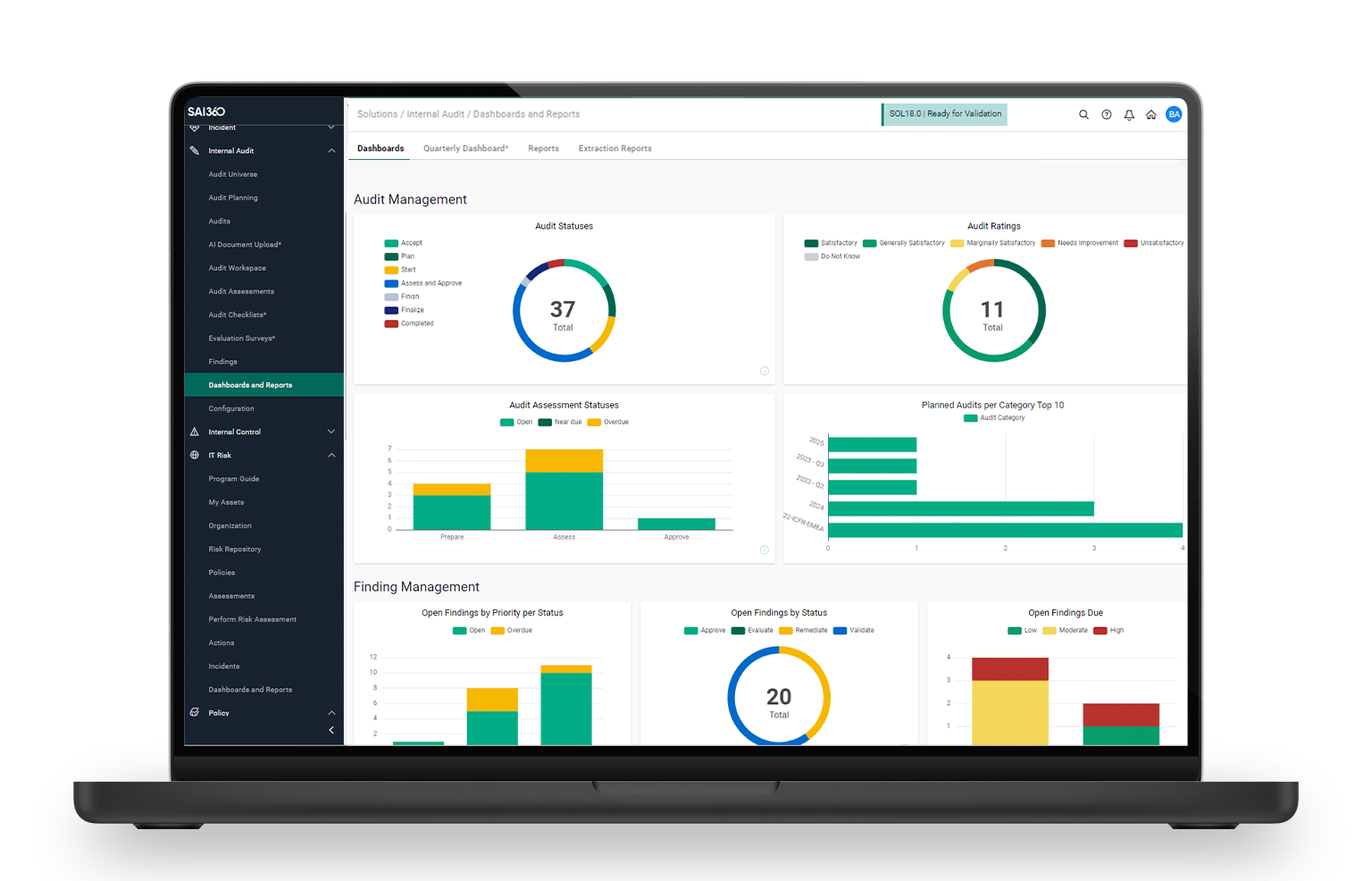
Internal Audit
  • THE CHALLENGE

Maintaining an Effective ISMS Can Be Complex

ISO 27001 is more than a one-time certification milestone. It requires organizations to continuously demonstrate the effectiveness of the controls, risk management practices, and security processes they rely on to protect sensitive information. As your business evolves, so do your systems, users, suppliers, technologies, and regulatory obligations.

Managing an ISMS through spreadsheets, emails, and disconnected systems creates unnecessary complexity. Security teams spend valuable time updating asset inventories, documenting risk assessments, collecting evidence, tracking policy changes, and preparing for surveillance audits instead of strengthening their organization’s security posture.

Maintaining an effective ISMS requires more than preparing for the next surveillance audit. Organizations need continuous visibility into risks, controls, assets, policies, and evidence to keep pace with evolving security threats and business change. A connected governance approach helps simplify ongoing compliance, strengthen security oversight, and demonstrate ISO 27001 conformance that builds trust with customers and business partners.

Streamline Compliance & Audits

Reduce repetitive compliance work by mapping your security controls to the ISO 27001 framework. Reuse evidence, eliminate duplicate effort, and stay prepared for certification and surveillance audits year-round.

Strengthen Security Governance

Improve internal security processes using the ISO 27001 framework to standardize access management, incident response, and security governance. Reduce manual work, improve operational consistency, and strengthen your ISMS.

Enhanced Trust and Reputation

Demonstrate your commitment to information security with the ISO 27001 framework to build confidence with customers, partners, and stakeholders. Simplify security reviews and support due diligence with well-documented practices.

  • THE SAI360 DIFFERENCE

Streamline Your Path to Continuous ISO 27001 Compliance
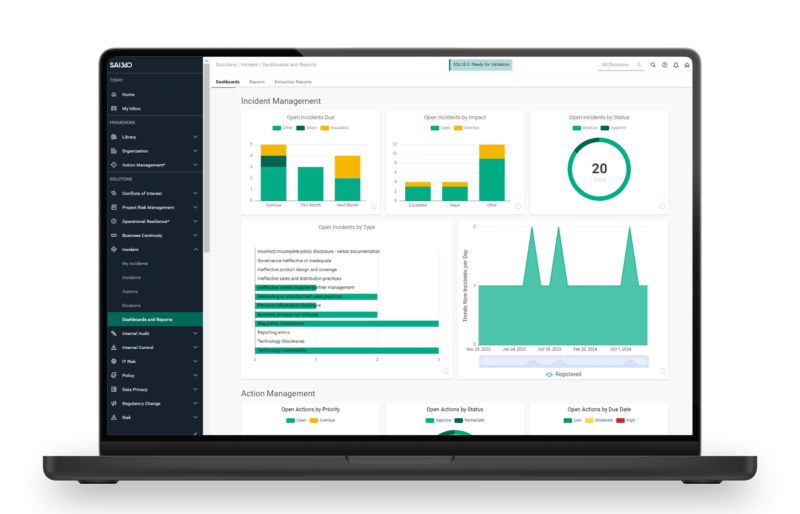
Incident Management
  • SUPPORTING MODULES

Supporting Your Entire ISO 27001 Certification Journey

Connect cybersecurity, data, and infrastructure risk to strengthen governance and support continuous compliance.

Drive continuous compliance and assurance by demonstrating effective internal controls through automated monitoring and connected evidence.

Centralize and automate your end-to-end policy lifecycle with streamlined approvals, automated attestation tracking, and greater accountability.

Manage third-party risk with centralized onboarding, continuous monitoring, and connected oversight across your vendor ecosystem.

Identify, assess, and monitor enterprise risk with centralized visibility into risk exposure, emerging threats, and key risk indicators to support faster, risk-informed decisions.

Stay ahead of regulatory change by monitoring evolving requirements, mapping obligations to risks and controls, and automating compliance workflows.

Ready to navigate ISO 27001 with confidence?

See how SAI360 helps you build and maintain a connected ISMS for continuous ISO 27001 compliance.

  • Connect risks, controls, policies, and evidence.

  • Simplify surveillance audits and recertification.

  • Strengthen security governance with continuous visibility.

  • Improve traceability across your ISMS.

FAQs

ISO/IEC 27001 is an internationally recognized standard that helps organizations establish and maintain an Information Security Management System (ISMS). It provides a risk-based framework for managing information security through policies, controls, risk assessments, and continual improvement.

Organizations of any size or industry can implement ISO 27001 to establish an Information Security Management System (ISMS), manage information security risks, and demonstrate their commitment to protecting sensitive information. 

The core components of ISO 27001 include risk assessments, security objectives, documented policies and procedures, security controls, internal audits, management reviews, and continual improvement of the Information Security Management System (ISMS). 

Annex A is a catalog of 93 reference security controls that help organizations address information security risks identified through their risk assessment. The controls are organized into four categories: organizational, people, physical, and technological. These are selected based on an organization’s unique risk profile.

No, ISO 27001 certification is not legally required. However, many organizations pursue certification to demonstrate a strong commitment to information security, build trust with customers and partners, and meet contractual or regulatory requirements. 

The benefits of ISO 27001 include stronger information security, improved risk management, greater operational resilience, increased stakeholder trust, and better preparedness for audits, regulatory requirements, and customer expectations.