EU Artificial Intelligence Act (AI Act)

The EU Artificial Intelligence Act (AI Act) is the world’s first comprehensive legal framework governing artificial intelligence. It establishes harmonized rules across the European Union to ensure AI systems are safe, transparent, and aligned with fundamental rights.

Adopted as Regulation (EU) 2024/1689, the AI Act introduces a risk-based approach to AI governance that imposes stricter requirements on systems that pose higher risks to individuals and society.

The regulation applies not only to organizations within the EU, but also to any company placing AI systems on the EU market or using AI outputs affecting EU citizens.

COSO Principles

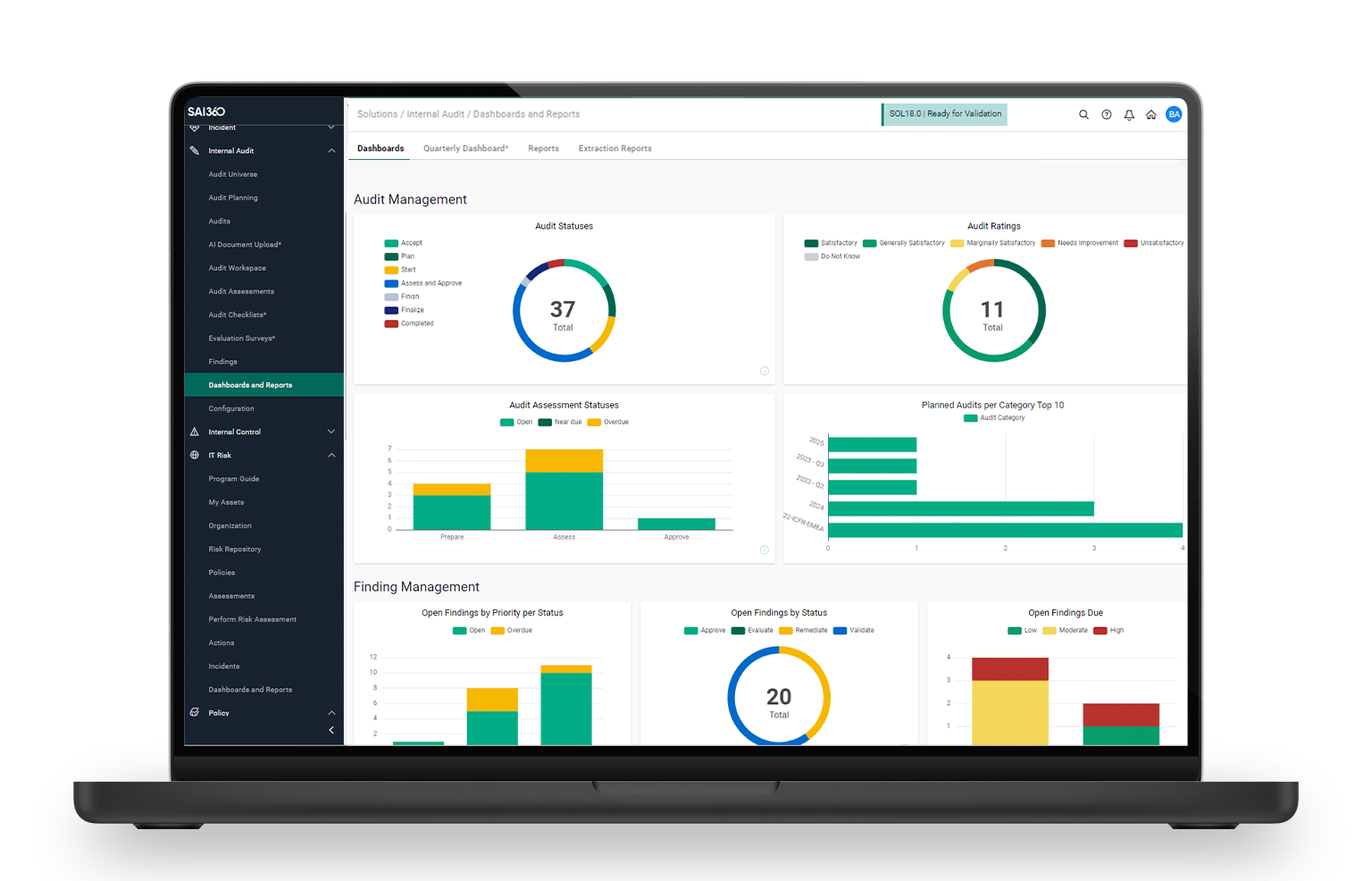
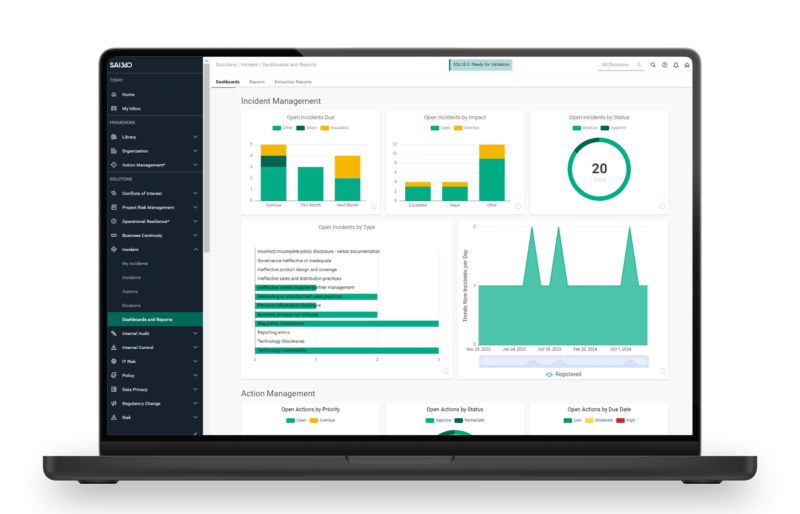
SAI360 helps organizations take a practical, structured approach to meeting the requirements of the EU AI Act. It brings together your AI inventory, risk assessments, and controls in one place so you can clearly understand where you stand and what needs attention. With built-in workflows and reporting, teams can stay on top of ongoing monitoring and documentation without adding unnecessary complexity.

The result is a more confident approach to AI governance that keeps pace with both regulatory expectations and business innovation.

Modules That Power The Solution

Enterprise & Operational Risk

Identify, assess, and manage risk across your enterprise.

  • Centralize risk data and controls
  • Automate assessments and reporting
  • Track ownership and risk scoring

Internal Controls

Reinforce risk mitigation with tested, auditable, and accountable controls.

  • Automate testing and evidence collection
  • Link controls to risks and findings
  • Streamline SOX compliance and audit readiness

Policy Management

Centralize and automate your end-to-end policy lifecycle.

  • Streamline creation, approvals, and tracking
  • Link policies to compliance and risk
  • Integrate with training, disclosures, and reporting

Internal Audit

Drive assurance and accountability with streamlined internal audits.

  • Plan and scope audits with confidence
  • Centralize documentation and workflows
  • Track findings through to resolution

Regulatory Compliance

Stay ahead of regulations with real-time compliance oversight.

  • Monitor and implement regulatory changes
  • Map requirements to risks and controls
  • Automate workflows and audit tracking

Ethics & Compliance Training

Deliver engaging and impactful training aligned to policies and risks

  • Deliver engaging, role-based content
  • Support global languages and formats
  • Track completion and participation metrics

FAQs

The EU AI Act is a comprehensive regulation that establishes rules for the development, deployment, and use of artificial intelligence across the European Union. It is designed to ensure AI systems are safe, transparent, and aligned with fundamental rights.

The AI Act applies to organizations operating within the EU, as well as companies outside the EU that place AI systems on the EU market or whose AI systems impact individuals in the EU.

The AI Act categorizes AI systems based on their level of risk to individuals and society. Systems that pose higher risks are subject to stricter requirements, while lower-risk systems face fewer obligations.

High-risk AI systems typically include those used in areas such as employment, healthcare, financial services, critical infrastructure, and law enforcement, where decisions can significantly affect people’s lives.

Yes. Certain AI systems are banned because they are considered to pose unacceptable risks, particularly those that violate fundamental rights or involve harmful manipulation or social scoring practices.

Organizations may need to implement measures such as risk assessments, documentation, transparency controls, human oversight, and ongoing monitoring depending on the classification of their AI systems.

The AI Act entered into force in 2024, with requirements being implemented in phases over the following years. Organizations should begin preparing early to meet upcoming obligations.

Non-compliance can result in significant financial penalties, including fines based on a percentage of global annual revenue, depending on the severity of the violation.

Organizations should begin by identifying where AI is used, assessing risk levels, documenting processes, and establishing governance frameworks to manage compliance over time.

Ongoing compliance requires continuous monitoring, regular updates to documentation, and coordination across legal, risk, and technology teams to ensure AI systems remain aligned with regulatory expectations.

Let Us Help

SAI360 helps you stay ahead of AI risk and regulation so you can:

  • Identify and classify AI systems

  • Strengthen governance and oversight

  • Support EU AI Act compliance

  • Build trust with stakeholders and regulators