11 Step Checklist for Effective Conflicts of Interest Management
Conflicts of Interest Management Checklist
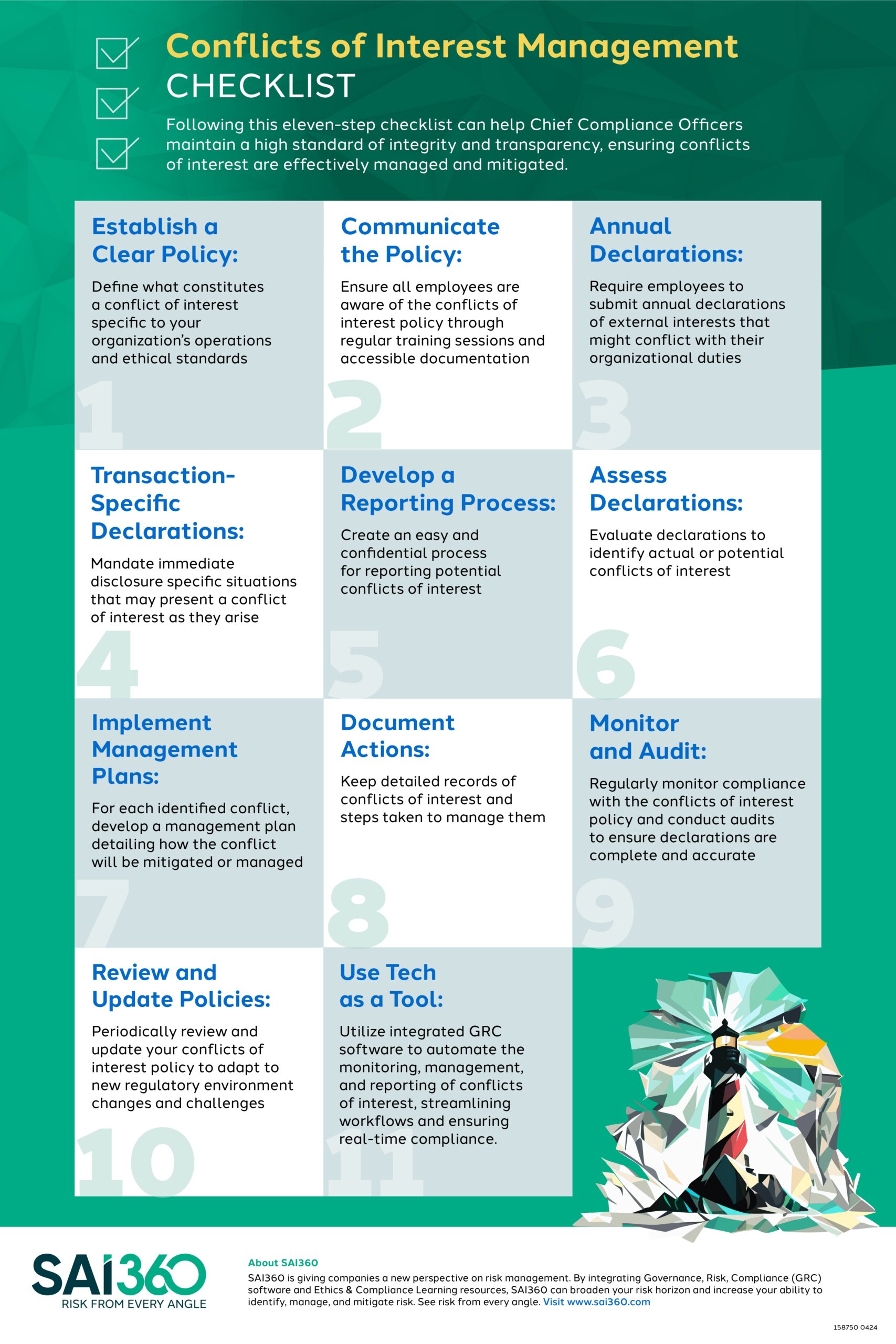
Following this eleven-step checklist can help Chief Compliance Officers maintain a high standard of integrity and transparency, ensuring conflicts of interest are effectively managed and mitigated.
-
Establish a Clear Policy
Define what constitutes a conflict of interest specific to your organization’s operations and ethical standards. -
Communicate the Policy
Ensure all employees are aware of the conflicts of interest policy through regular training sessions and accessible documentation. -
Annual Declarations
Require employees to submit annual declarations of external interests that might conflict with their organizational duties. -
Transaction-Specific Declarations
Mandate immediate disclosure of specific situations that may present a conflict of interest as they arise. -
Develop a Reporting Process
Create an easy and confidential process for reporting potential conflicts of interest. -
Assess Declarations
Evaluate declarations to identify actual or potential conflicts of interest. -
Implement Management Plans
For each identified conflict, develop a management plan detailing how the conflict will be mitigated or managed. -
Document Actions
Keep detailed records of conflicts of interest and steps taken to manage them. -
Monitor and Audit
Regularly monitor compliance with the conflicts of interest policy and conduct audits to ensure declarations are complete and accurate. -
Review and Update Policies
Periodically review and update your conflicts of interest policy to adapt to new regulatory environment changes and challenges. -
Use Tech as a Tool
Utilize integrated GRC (Governance, Risk, Compliance) software to automate the monitoring, management, and reporting of conflicts of interest—streamlining workflows and ensuring real-time compliance.
Share this article
Follow us
Table of Contents