FRAMEWORK

Maintain Continuous AI Oversight for EU AI Act Compliance

The EU AI Act establishes a risk-based framework designed to ensure AI systems are safe, transparent, and aligned with fundamental rights. SAI360 helps organizations connect AI systems and risk classifications to regulatory requirements, controls, evidence, and accountable owners. Strengthen continuous oversight and maintain defensible compliance as AI use, risks, and regulatory requirements evolve.
Internal Audit
  • THE CHALLENGE

Managing AI Risk Becomes More Complex as AI Adoption Grows

The EU AI Act requires organizations to understand where AI is being used, how systems are classified, what risks they introduce, and which obligations apply. As AI adoption expands across the enterprise, maintaining consistent visibility and governance becomes increasingly difficult.

Managing AI governance through spreadsheets, emails, and disconnected systems creates additional complexity. Teams spend valuable time identifying AI systems, conducting risk assessments, gathering documentation, assigning ownership, and tracking remediation across legal, compliance, risk, security, and business functions.

Effective AI governance requires continuous visibility into AI systems, risks, controls, assessments, and accountable owners. A connected approach helps organizations identify governance gaps earlier, strengthen oversight, and maintain defensible evidence as AI systems, use cases, and regulatory requirements evolve.

Centralize AI Governance Evidence

Bring AI systems, risk assessments, controls, and supporting evidence together in one connected platform. Reduce time spent gathering documentation and maintain a trusted, traceable view of EU AI Act compliance.

Strengthen AI Risk Decision-Making

Connect AI systems and regulatory requirements to risks, controls, assessments, and remediation activities. Improve visibility into AI exposure and give teams the information needed to prioritize risk and make defensible governance decisions.

Maintain Continuous AI Oversight

Article 9 requires AI risk management to operate as a continuous process. Keep risk assessments, findings, remediation, and supporting evidence current as AI usage evolves. Identify governance gaps earlier and maintain defensible evidence of AI risk oversight.

  • THE SAI360 DIFFERENCE

Strengthen Continuous Risk Management Across the AI Lifecycle
Incident Management
  • SUPPORTING MODULES

Support Your EU AI Act Compliance Program Across the Enterprise

Assess third-party AI risk, strengthen vendor oversight, and maintain visibility into external AI systems that may introduce regulatory exposure.

Connect AI risk to enterprise exposure, controls, and ownership to support informed decisions and strengthen risk oversight.

Connect AI requirements to controls, testing, and evidence to strengthen assurance and maintain visibility into control effectiveness.

Stay ahead of evolving AI regulations by monitoring changes, mapping requirements to risks and controls, and streamlining compliance workflows.

Connect cybersecurity, data, and infrastructure risk to strengthen governance and support continuous risk and compliance oversight.

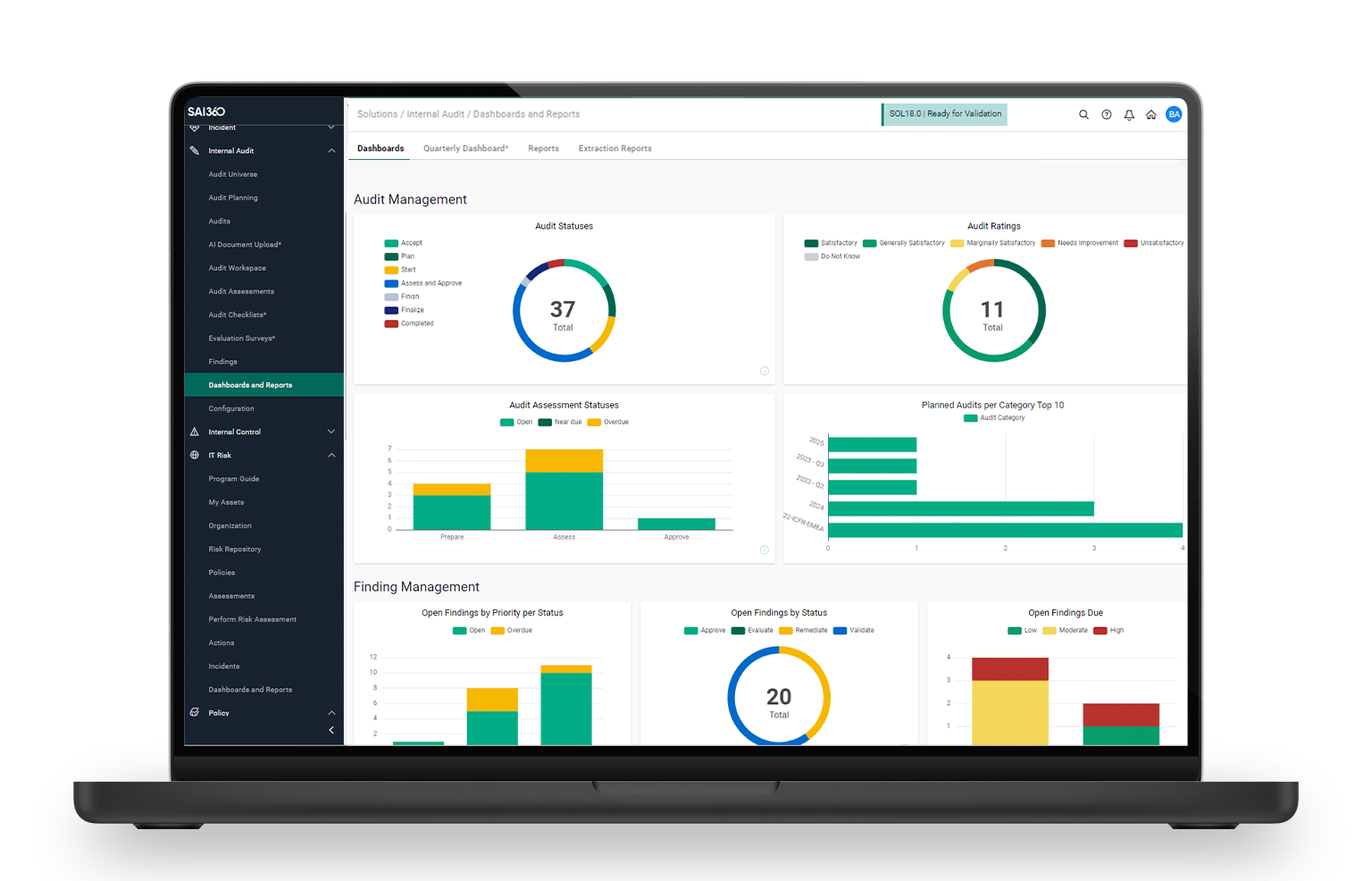
Strengthen AI assurance with connected audits, evidence, and findings to identify governance gaps and support defensible oversight.

Ready to Strengthen Your EU AI Act Readiness?

See how SAI360 helps organizations connect AI systems, risks, controls, evidence, and accountability to strengthen AI governance and maintain continuous visibility into EU AI Act compliance.

  • Centralize AI systems, assessments, and evidence.

  • Connect EU AI Act requirements to risks and controls.

  • Establish clear ownership and accountability.

  • Track findings and remediation activities.

  • Maintain continuous visibility into AI risk. 

FAQs

The EU AI Act is a comprehensive regulatory framework governing the development, deployment, and use of artificial intelligence in the European Union. It establishes requirements designed to promote safe, transparent, and responsible AI while protecting health, safety, and fundamental rights. 

The EU AI Act applies to organizations that develop, provide, deploy, import, or distribute AI systems within its scope. Its reach can extend beyond the EU when organizations place AI systems on the EU market or their use produces outputs within the EU. 

The EU AI Act applies different requirements based on the level and type of risk an AI system presents. Higher-risk systems face more extensive governance requirements, while other AI systems may be subject to transparency obligations or fewer requirements depending on their classification. 

Requirements vary based on an organization’s role and the classification of the AI system. For high-risk systems, obligations can include risk management, technical documentation, recordkeeping, human oversight, data governance, accuracy, cybersecurity, and ongoing monitoring throughout the AI lifecycle. 

Start by identifying AI systems and use cases across the organization, determining applicable roles and risk classifications, and assessing existing governance against relevant requirements. From there, establish ownership, address control gaps, document decisions, and build repeatable processes for ongoing oversight.

EU AI Act compliance requires more than a point-in-time assessment. Organizations should continuously reassess AI risk, maintain current documentation and evidence, monitor regulatory changes, track remediation, and establish clear ownership so governance remains aligned as AI systems, use cases, and requirements evolve.